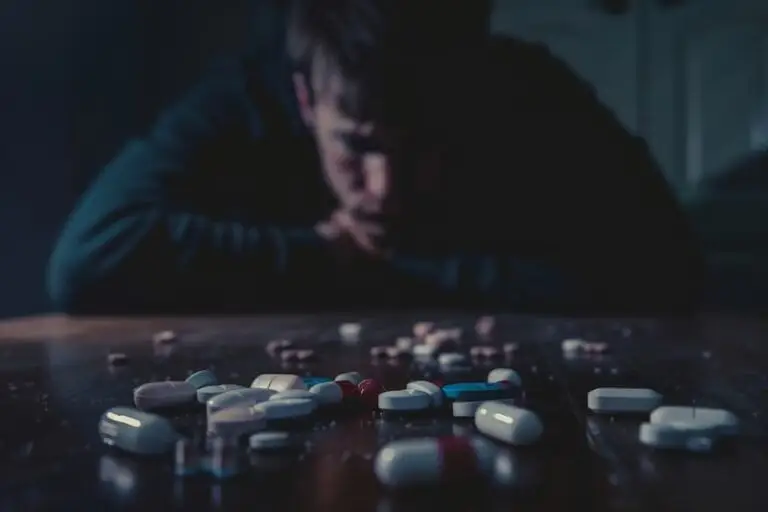

Tolerance vs dependence vs addiction comes down to three different changes. Tolerance means your body needs more of a substance to feel the same effect. Dependence means your body has adapted so much that stopping causes withdrawal. Addiction, now called substance use disorder, means you keep using despite harm and struggle to stop.
The three often show up together, which is why people use the words as if they mean the same thing. They don't. Knowing which one you are looking at helps you decide what kind of help makes sense, whether you are asking for yourself or for a husband, son, or father.
Clinically reviewed by Tyler Coe, APRN, FNP-C, Medical Director at Renaissance Ranch. Reviewed October 2026.
Tolerance vs. dependence vs. addiction at a glance
| Term | What it is | What causes it | Does it mean addiction? |
|---|---|---|---|
| Tolerance | Needing more of a substance to get the same effect | The brain and body adjust to repeated use | No, but it can be an early warning sign |
| Dependence | Withdrawal symptoms when the substance is stopped or cut back | The body adapts to having the substance present | No, it can happen with medication taken exactly as prescribed |
| Addiction (substance use disorder) | Compulsive use that continues despite harm | Changes in brain circuits for reward, stress, and self-control | Yes, it is a treatable medical condition |
What is tolerance?
Tolerance is when your body gets used to a substance, so the same amount produces a weaker effect. You need more to feel what you used to feel. It is a normal biological response to repeated use, and on its own it does not mean a person has an addiction.
Alcohol is the classic example. A man who used to feel relaxed after one beer may notice that, months later, it takes three or four to get the same feeling. Nothing about his character changed. His brain and liver adjusted to regular drinking.
Tolerance matters because it pushes use upward. Drinking or using more to chase the same effect raises the risk of health problems, and it can be the first step toward dependence.
What is dependence?
Dependence means your body has adapted to a substance so fully that it now functions "normally" only when the substance is present. When you stop or cut back, withdrawal symptoms appear. Dependence is physical, it can develop with prescribed medication, and it is not the same thing as addiction.
The National Institute on Drug Abuse (NIDA) makes this distinction clearly. Someone prescribed an opioid after surgery, or a benzodiazepine for anxiety, can become physically dependent while taking the medication exactly as directed. If they stop suddenly, withdrawal can follow. That person is dependent, but they are not necessarily addicted.
Withdrawal looks different depending on the substance. With alcohol it can include shaking, sweating, anxiety, trouble sleeping, and a racing heart.
Where medically supervised detox fits
For some substances, withdrawal is more than uncomfortable. Alcohol and benzodiazepine withdrawal can be dangerous and, in some cases, life threatening, which is why stopping belongs under medical supervision rather than at home alone.
Medical detox gives the body a safe place to stabilize while doctors and nurses watch for complications and manage symptoms. For some people, medication assisted treatment is part of that plan. How a person comes off a substance is a medical decision made with a physician, never something to plan on your own.
What is addiction?
Addiction is a chronic but treatable medical condition in which a person keeps using a substance even though it is causing harm, and finds it very hard to stop. NIDA describes it as compulsive use despite harmful consequences. Today clinicians diagnose it as substance use disorder.
According to NIDA's Drugs, Brains, and Behavior: The Science of Addiction, addiction involves changes in brain circuits tied to reward, stress, and self-control. That is why willpower alone so often falls short. A man with a substance use disorder may truly want to stop and still return to using.
What sets addiction apart is behavior. Signs include:
- Using more, or for longer, than intended
- Trying to cut back and not being able to
- Strong cravings
- Letting work, family, or faith commitments slip
- Continuing to use despite problems with health, relationships, or the law
How DSM-5 changed the language
Older diagnostic manuals split problems into "substance abuse" and "substance dependence," which helped blur the line between physical dependence and addiction. In 2013, the DSM-5 replaced both with a single diagnosis, substance use disorder, rated as mild, moderate, or severe based on how many criteria a person meets. Tolerance and withdrawal that happen only during appropriate medical treatment do not count toward the diagnosis.
Can you be dependent without being addicted?
Yes. You can be physically dependent on a substance without having an addiction. Dependence describes how the body adapts and reacts when the substance stops. Addiction describes compulsive use despite harm. A person taking prescribed medication as directed can be dependent and still be in full control of how they use it.
The reverse is also true. A person can have a serious substance use disorder before obvious withdrawal ever shows up. That is why clinicians look at the whole picture, not just one symptom.
Does tolerance mean I am addicted?
No. Tolerance alone does not mean you are addicted. It means your body has adjusted to repeated use. Still, rising tolerance is worth paying attention to, especially with alcohol, because needing more over time increases health risks and can lead toward dependence and substance use disorder.
A helpful question is not "How much can I handle?" but "Is my use still a choice?" If you find yourself drinking or using more than you planned, hiding it, or feeling unable to stop, that points past tolerance toward a substance use disorder.
Related, but not interchangeable
Tolerance, dependence, and addiction are connected, and one often leads to the next. But they are not interchangeable. Tolerance describes how much it takes to feel an effect. Dependence describes what happens when you stop. Addiction describes a loss of control over use, despite the cost.
When a person has all three, the situation is usually more serious, and that is the point where professional care makes the biggest difference.
When should you get help?
You should get help when use feels hard to control, when stopping brings withdrawal, or when drinking or drug use is hurting your health, work, or family. Effective care pairs licensed clinicians and evidence based therapy, such as cognitive behavioral therapy (CBT), with medical detox when withdrawal is a risk.
At Renaissance Ranch, faith and the 12 Steps are woven into that clinical care as a source of strength and brotherhood. For over 25 years we have treated men across Utah and Idaho through a full continuum:
- Medical detox for safe stabilization when withdrawal is a risk.
- Residential treatment, where men live on site and receive daily clinical care for about 60 days.
- Intensive outpatient (IOP), so men keep building recovery while returning to work and family.
Most men commit to an 8 month track: about 2 months of residential treatment, then about 6 months of IOP. Many programs, Renaissance Ranch included, accept Medicaid, and our admissions team verifies your benefits at no cost. If alcohol is the main concern, our page on alcohol addiction treatment explains what care looks like.
Families matter here too. If you are a spouse or parent trying to make sense of these terms, our free family support classes are taught from real experience and are open to the public. You can also find treatment information any time through the SAMHSA National Helpline. If you or someone you love is in crisis, call or text 988.
Frequently asked questions
What is the difference between tolerance and dependence?
Tolerance means you need more of a substance to feel the same effect. Dependence means your body has adapted so that stopping causes withdrawal symptoms. Tolerance often comes first, but a person can have one without the other.
Is physical dependence the same as addiction?
No. Physical dependence is the body's adaptation to a substance, and it can happen with medication taken exactly as prescribed. Addiction, or substance use disorder, is compulsive use that continues despite harm.
Is it safe to stop drinking on my own if I am dependent on alcohol?
Alcohol withdrawal can be dangerous and, in some cases, life threatening. If you are dependent on alcohol or benzodiazepines, talk with a doctor or a medical detox program before stopping so withdrawal can be managed safely.
What did DSM-5 change about substance abuse and dependence?
In 2013, DSM-5 replaced the separate "substance abuse" and "substance dependence" diagnoses with one diagnosis, substance use disorder. It is rated as mild, moderate, or severe based on how many criteria a person meets.
How long is treatment at Renaissance Ranch?
Residential treatment at Renaissance Ranch is about 60 days. Most men commit to an 8 month track of about 2 months residential treatment followed by about 6 months of intensive outpatient care.